Now Reading: Mnangagwa term plan faces resistance
-
01
Mnangagwa term plan faces resistance
Mnangagwa term plan faces resistance
by SIBONGILE SIBANDA
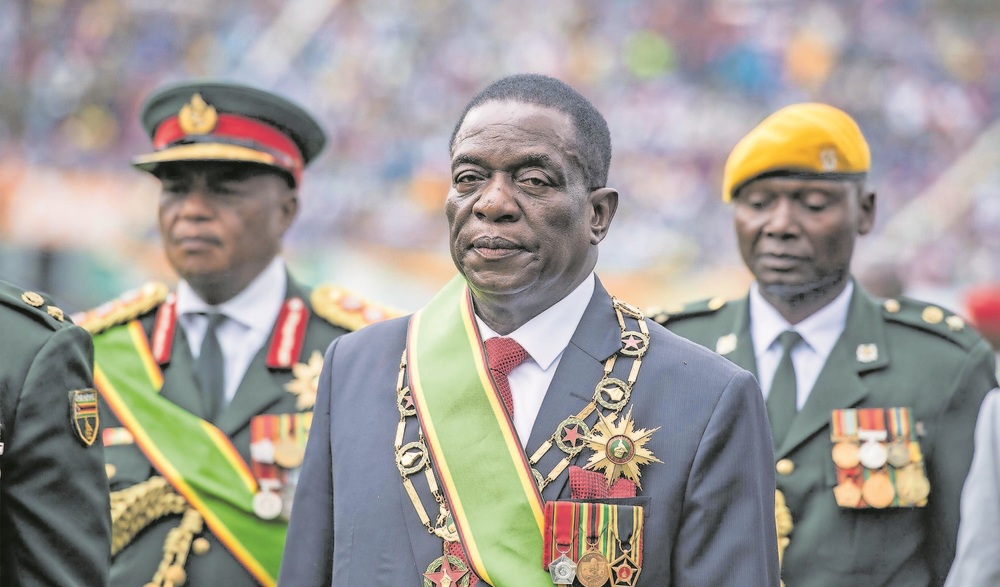
VICTORIA FALLS – LEGAL practitioners in Matabeleland North have launched an awareness campaign on the Constitution of Zimbabwe (Amendment No. 3) Bill, 2026, even as mounting public opposition emerges against proposals widely seen as paving the way to extend the tenure of President Emmerson Mnangagwa beyond 2028 without a fresh electoral mandate.
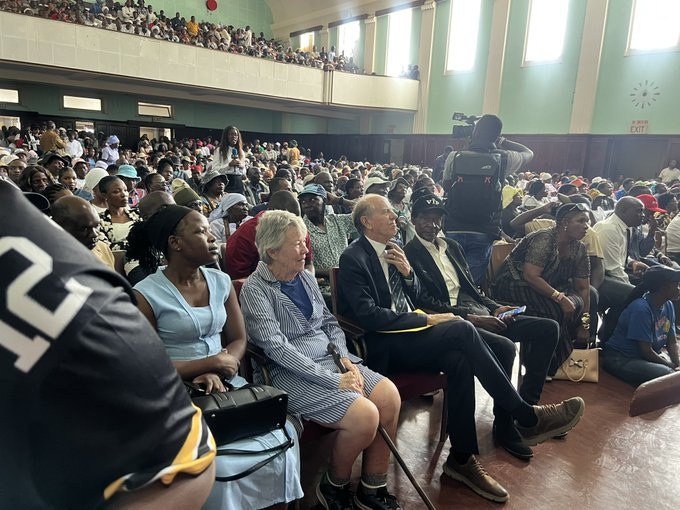
The campaign, rolled out in Victoria Falls and Hwange, aims to explain the Bill’s provisions and counter what organisers describe as misinformation.
However, critics argue the initiative is unfolding in a context where many Zimbabweans have already rejected any extension of presidential term limits, citing democratic principles and the country’s 2013 Constitution.
At a meeting in Hwange, legal expert Dr Clement Mukwasi said Parliament was acting within its authority.
“The reforms in the Constitution of Zimbabwe (Amendment No. 3) Bill, 2026 represent a profound recalibration of Zimbabwe’s democratic architecture. They transform the system of electing the President and the national election cycle without altering the fundamental structure of government,” he said.
Mukwasi added: “These changes are strategic, forward-looking, and patriotic. By aligning with best practices in the Southern African Development Community (SADC) and the Commonwealth, the reforms promote institutional maturity and enduring stability.”
He argued that Section 328 of the Constitution empowers Parliament to amend the supreme law and that a referendum is only mandatory in limited instances, such as changes to the Declaration of Rights or land provisions.
Legal practitioner Tonderai Mutasa echoed this position, describing the Bill as “transformative.” He said: “The Constitution of Zimbabwe (Amendment No. 3) Bill, 2026 boldly unleashes reforms that fortify constitutional governance, invigorate democratic institutions and align Zimbabwe with proven practices from progressive nations.”
Despite these endorsements, constitutional experts and opposition voices warn the proposed changes undermine democratic legitimacy.
Prominent human rights lawyer David Coltart said extending a presidential term without a direct vote would violate the spirit of constitutionalism.
“No Parliament has the moral authority to extend the tenure of a sitting President beyond what voters endorsed at the ballot box,” Coltart said.
“Such a move erodes public trust and sets a dangerous precedent for the erosion of democratic safeguards.”
Similarly, constitutional law scholar Lovemore Madhuku warned that altering term limits through parliamentary processes alone risks delegitimising both the office of the President and the Constitution itself.
“The essence of a Constitution is to restrain power, not to facilitate its extension,” Madhuku said. “If citizens are denied the right to decide on leadership through elections, the very foundation of democracy is weakened.”
Analysts note that Zimbabwe’s 2013 Constitution, adopted after years of political crisis, was designed to prevent the concentration of executive power.
Any attempt to extend presidential tenure without a referendum is widely viewed as inconsistent with that objective.
Public sentiment, reflected in civic discourse and political commentary, suggests a majority of Zimbabweans oppose any extension beyond 2028, fearing a return to prolonged incumbency and weakened accountability.
While the awareness campaign continues across Matabeleland North, the debate has evolved into a broader national question: whether constitutional amendments should serve the people’s will or political convenience.
For many observers, the answer will define Zimbabwe’s democratic trajectory for years to come.













Stay Informed With the Latest & Most Important News
Previous Post
Next Post











Advertisement