Now Reading: Taxi explosion kills passengers along Gwanda-Bulawayo
-
01
Taxi explosion kills passengers along Gwanda-Bulawayo
Taxi explosion kills passengers along Gwanda-Bulawayo
by NQOBANI MATIBELA
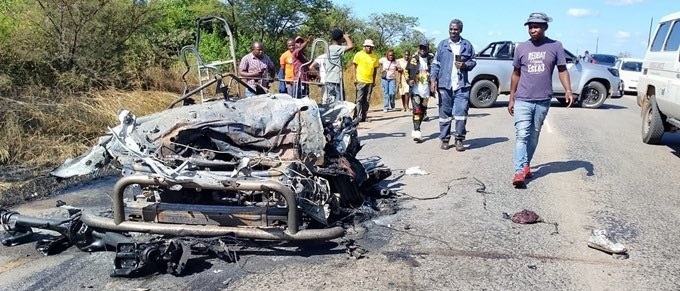
GWANDA – FEARS are mounting that up to 18 people may have died on the spot after a South Africa-registered Toyota Quantum minibus taxi exploded along the Bulawayo–Gwanda Road.
The incident occurred on Thursday (today) near Much Binding, leaving a scene of devastation that eyewitnesses described as catastrophic.
Witnesses told Matabele Today that body parts were strewn metres from the blast site, while flames spread rapidly to nearby grassland.
Authorities have yet to confirm the exact number of fatalities, although estimates suggest around 18 people may have been killed.
The cause of the explosion remains unknown, with speculation ranging from mechanical failure to the possible transportation of hazardous materials.
Social media was flooded with reactions as onlookers expressed shock and concern over the tragedy, as well as the challenges investigators may face in determining the cause and identifying victims.
One contributor, Stan Moyo Jnr, said: “I doubt we can have answers with our Zim technology, so sad,” while Muzi Zulu added: “Forensic investigation needed here, this is very serious.”
Lukias Shayawabaya expressed grief, stating: “Very sad and Painful. May their Souls Rest in Peace.”
Others speculated on the possible involvement of dangerous goods. Isaiah Garrison said: “This is so sad. What a tragedy…It’s all caused by buying filled gas tanks, SA has a tendency of selling filled gas tanks from shops,” while Magneto Bhuru reMasvingo remarked: “People are carrying filled gas tanks in motor vehicles especially from SA into Zimbabwe.”
Alonzo Alonzo added: “Just last week a truck with explosives was intercepted beitbridge boder coming into SA. It might not be surprising if a passenger was carrying explosives in a public transport TAXI.”
Transporting explosives, gas cylinders or other flammable materials in public passenger vehicles is extremely dangerous and, in most cases, illegal.
These substances can ignite or detonate due to heat, friction, impact or poor storage conditions, especially in tightly packed vehicles such as minibus taxis.
Even a small gas leak in an enclosed space can trigger a powerful explosion, putting dozens of lives at risk within seconds.
Public transport vehicles are not designed or equipped to safely carry hazardous materials, lacking proper ventilation, containment systems and emergency response mechanisms.
Authorities across the region have repeatedly warned that such practices significantly increase the likelihood of mass-casualty incidents.
Passengers are urged to avoid boarding vehicles carrying suspicious or hazardous goods and to report such cases to law enforcement.
Zimbabwe continues to face serious road safety challenges.
According to official statistics, more than 2,000 people die on Zimbabwe’s roads each year, with thousands more injured in traffic-related incidents.
Factors contributing to these accidents include speeding, human error, vehicle unroadworthiness, and, increasingly, unsafe practices such as the transportation of hazardous materials in passenger vehicles.
The latest tragedy underscores the urgent need for stricter enforcement of transport regulations and increased public awareness to prevent avoidable loss of life.
Investigations into the cause of the explosion are ongoing.










Stay Informed With the Latest & Most Important News
Previous Post
Next Post












Advertisement