Now Reading: Beitbridge–Bulawayo highway: Youths wait, jobs stall
-
01
Beitbridge–Bulawayo highway: Youths wait, jobs stall
Beitbridge–Bulawayo highway: Youths wait, jobs stall
by FHATU MULAUDZI in Beitbridge & NQOBANI MATIBELA in Gwanda
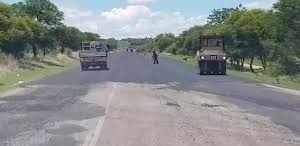
BEITBRIDGE – THE distance between Beitbridge and Gwanda is just 198 kilometres, while from Gwanda to Bulawayo is a mere 126 kilometres.
Yet, after two terms in office, President Emmerson Mnangagwa’s government has failed to complete this critical highway, leaving communities in Matabeleland South questioning whether the government is genuinely committed to improving citizens’ lives.
Residents argue that the prolonged neglect of this key transport corridor fuels the perception of marginalisation in both Matabeleland South and North.
“Can someone explain why Mnangagwa’s ten years in office have yielded no progress on the Beitbridge–Gwanda–Bulawayo highway? This road is vital for trade, tourism, and connecting our communities to the rest of Zimbabwe,” said Makhadzi Mudzunga, a local resident.
Infrastructure development, particularly roads, railways, and transport networks, is critical for economic growth. Highways like Beitbridge–Bulawayo unlock commercial opportunities, facilitate movement of goods, reduce transport costs, and attract investment.
For local communities, completed roads provide access to markets, schools, healthcare, and tourism, while enabling small businesses, startups, and farming ventures to thrive.
Young people, in particular, benefit significantly when employment and entrepreneurship replace reliance on government handouts.
Instead of waiting for food parcels or donations, empowered youth can start businesses in hospitality, travel, tourism, agriculture, and mining.
Gainful employment or self-run enterprises also helps reduce the social ills that arise from idleness.
Communities with high youth unemployment often experience rising crime, alcohol abuse, and social unrest, as idle youth become susceptible to criminal activities out of desperation.
Sipho Moyo, a young entrepreneur in Gwanda, explained: “We do not want handouts or misplaced priorities such as sponsoring a US$25 million football tournament. We want infrastructure that creates jobs, attracts tourists, and develops our communities. The Beitbridge–Gwanda–Bulawayo highway would allow young people to start businesses, engage in productive work, and reduce crime.”
Similarly, Thabelo Ramavhoya highlighted the economic significance of the highway: “This corridor carries major commercial traffic, including cross-border trucks between South Africa and Zimbabwe. Completing it will reduce unemployment, stimulate business, and integrate Matabeleland into the national economy. The youth will have hope, and the region will flourish.”
Many in Matabeleland feel neglected due to historical political marginalisation. Investments often favour other provinces, while local priorities—such as roads, schools, hospitals, and water supply—remain underfunded. Misplaced spending on events like the ZIFA Munhumutapa Challenge Cup or donations to celebrities has heightened frustration among communities, especially the youth.
Experts argue that timely completion of infrastructure projects not only improves national logistics but also empowers regions economically. Roads connect people, unlock tourism potential, stimulate small and medium enterprises, and provide long-term employment.
For Matabeleland, the Beitbridge–Gwanda–Bulawayo highway represents more than a road—it is a pathway to economic inclusion, youth empowerment, and social stability.
Without urgent action, communities will continue to feel sidelined, and the region’s potential will remain untapped.
Citizens urge the government to prioritise meaningful development that benefits the majority rather than showcase projects that serve few.










Stay Informed With the Latest & Most Important News
Previous Post
Next Post
Previous Post

Next Post









Advertisement